There are many reasons why Ukraine can pull off spectacular intelligence operations against Moscow. One of them is surely this: a lot of the important people working for Moscow today are dumb. The higher their rank, the dumber they tend to be. You simply have to be a certain kind of dumb to have a long career in Putin’s kingdom.
However, I want to talk about another likely reason why Ukrainian intelligence officers often run rings around their counterparts from the so-called Russian Federation. It is a reason that should be getting a lot more attention and airtime, and not just in military contexts.
Let me first state that reason in a fancy way:
On average, a person from Ukraine has an inherent epistemic advantage over a person from the Russian Federation when it comes to understanding all things Russian.
Now in plain English:
Ukrainians know Russians better than Russians know themselves.
This includes Russians who are not dumb at all. In fact, to understand how this epistemic disparity works it is best to imagine an intelligent well-educated Russian who knows a lot about their homeland. In particular, they know full well that the Russian Federation has a lot of systemic problems.
Here is a summary of some of those problems in seven paragraphs. Sorry about so many paragraphs. For the point I want to make, it is important to keep things specific.
1. Most people in Russia are poor (by EU standards, dirt poor). Income inequality is huge. Regional inequality is mind-boggling: Moscow, St. Petersburg and, to a lesser extent, a few other large urban areas have something resembling a Western-style middle class while the rest of the country is still living in the post-Soviet 1990s. Much of the countryside is stuck in a trashy alternative history novel where aliens dropped a bunch of cheap smartphones on a Brezhnev-era Soviet kolkhoz.
2. Alcoholism is rampant. Healthcare is generally crappy; many hospitals would scare the living shit out of someone from Sweden, Czechia or the UK. Facilities for children and adults with disabilities are concentration camps where inmates are treated like irritating, worthless animals.
3. Infrastructure is ridiculously inadequate. A lot of it is literally crumbling. There aren’t enough roads. There isn’t enough of anything that gets people from A to B. Central heating is decrepit and inefficient. Power grids are old. Millions of people live in ugly, hastily built houses in various states of rot, neglect and disrepair. Hundreds of schools don’t have proper toilets.
4. Speaking of schools, they are generally bad. Teachers are paid heartbreakingly little. Most are overworked; most are terrified of any government officials; many are quick to take out their stress and frustration on their students. On the whole, schooling is authoritarian and relies on various forms of psychological abuse. In most universities, things are either only marginally better or just as bad. As regards academic standards, the few relatively decent university departments and research institutes are vastly outnumbered by pointless degree-baking factories. The state of the humanities and social sciences is particularly abysmal. Much of the “research” and “teaching” going on there is either cargo-cult verbiage or chauvinist nonsense, or both.
5. The legal system is Stalinist through and through. Judges and prosecution are always on the same team. Laws only apply to those who have no power. At the same time, even if you do your very best to follow every single law, however absurd and oppressive, you will still be thrown in jail the moment someone in power wants you there.
6. The Moscow dictator and his closest buddies are completely above the law. Anyone else in power is above the law as long as they get along with the dictator and his buddies. Anyone can be stripped of their possessions and locked up at any moment. Consequently, the only thing that ultimately matters is your relationship with your biggest boss. Intelligence, effort, efficiency, expertise, truth—none of these things matter nearly as much as keeping the alpha male happy. Hence what I said at the beginning: in the Russian Federation, you’d better be dumb if you want a career.
7. The society ruled by Moscow is atomized. People don’t trust each other, and they hardly ever get together to right wrongs or defend their common interests. When they do manage to get together, the state immediately slaps them on the hand. People don’t trust the state either—indeed, they hardly trust anything—but they see the state as a force of nature. Worse still, they see it as their own force of nature, a hand-me-down monster fed by generations of their ancestors. They see it as an unpredictable, often murderous power that you can never hope to change but which you still identify with—because you have been told to identify with it your entire life.
Thank you for reading this far. Now back to Ukrainians. Your average educated Ukrainian over thirty, perhaps even younger, will be largely familiar with the tiresome Russia trivia I’ve listed above.
Keep in mind that all the propaganda the Kremlin spent years spreading about “the suppression of the Russian language” in Ukraine was bullshit. Educated adult Ukrainians, regardless of the language they grew up speaking at home, know Russian at least as well as I do. When Moscow invaded in full force in 2022, the language of the empire was still dominant in much of Ukraine and publicly acceptable in most of it. For today’s Ukrainians, not knowing Russian wasn’t an option. Moscow has spent centuries forcing its language and culture on Ukraine.
Ukrainians have seen countless Russian movies and TV shows. They have listened to, or at least heard, thousands of Russian pop songs. They have been exposed to Russian-language internet memes—as a matter of fact, they’ve created a lot of those themselves. Ukrainians who like reading old books will have read Russian classics. Ukrainian news junkies will have consumed an unhealthy amount of reports documenting Moscow’s slide into full-on fascism.
Ukrainians have had to deal with much of the same post-Soviet legacy as Russians. They know Moscow’s imperial myths and buzzwords. They’ve heard all of Moscow’s sulky geopolitical fairy tales, all the lies the Kremlin likes peddling about its Thousand-Year Russian Reich.
And let me stress this again: they have all the info that I info-dumped on you earlier about Moscow’s problems.
Knowing all that stuff is a crucial part of the Ukrainian trick. However, it isn’t the whole trick. The secret ingredient that gives Ukrainians their epistemic edge over Russians is, as I see it, this:
Ukrainians have no reason to believe there’s anything beyond and above that information. As long as you know what things are like in the Russian Federation, that’s it. You get it.
In this crucial regard, Russians are different. You see, when you have been conditioned to identify with a shitty empire, you tend to assume that there is some kind of saving grace to all the shittiness.
Even thoughtful, well-read, well-travelled Russians will often talk as if, behind all the corruption, all the lawlessness, all the poverty and all the military aggression, there is more to the Moscow state. In Russian discussions of “Russia”, one feels a tacit assumption that there must be some kind of extra, emergent quality—a quality that somehow makes Russian incompetence less incompetent, Russian poverty less hopeless, Russian tyranny more nuanced, and so on.
The Kremlin and its supporters broadcast the same assumption more crudely. They will tell you that this transcendent Russianness is definitely a thing. It’s been around since forever, and it justifies anything, including mass terror and genocide. What’s even cooler, this Russianness thing is kinda like the Force in Star Wars. If the Force is with you, then it doesn’t matter how incompetent everyone is. The Force will take care of things.
Ukrainians believe none of that. They don’t think there’s a metaphysical je ne sais fucking quoi that lends sneaky superpowers or other magical qualities to the Russian Federation. The empire is exactly the way it appears to be. See above.
Before I wrap this up, two important disclaimers:
Firstly, I don’t mean to downplay the threat that Moscow poses to Ukraine, Europe or the rest of the world. It doesn’t take much institutional smarts or a fervently mobilized society to kill people and raze cities to the ground. The Moscow state is functional enough to sell fossil fuels, make weapons, and turn its citizens into cannon fodder. That’s all it takes to be extremely dangerous. Ukraine understands that better than anyone.
Secondly, let me stress that I’m not saying anything new. Western politicians and intellectuals have been told time and again that no one understands “Russia” better than people colonized and oppressed by it. Since the beginning of the full-scale invasion, Tymothy Snyder, may the universe keep him safe, has been making this point ad nauseam. Most importantly, Ukrainians themselves have been saying for decades that they are particularly well-placed to provide insights into the Big Russian Whatever in all of its manifestations.
Ukrainians are absolutely right, now more than ever. Whatever Russian thing you want know more about—Russian military strategy, Russian politics, Russian literature, Russian colonialism, you name it—by all means, go ahead and ask some Russians that strike you as smart. You will certainly learn stuff. But above all, ask Ukrainians. It is quite likely they will tell you something your Russians never will. I say this as a Russian who has learned a lot from Ukrainians.
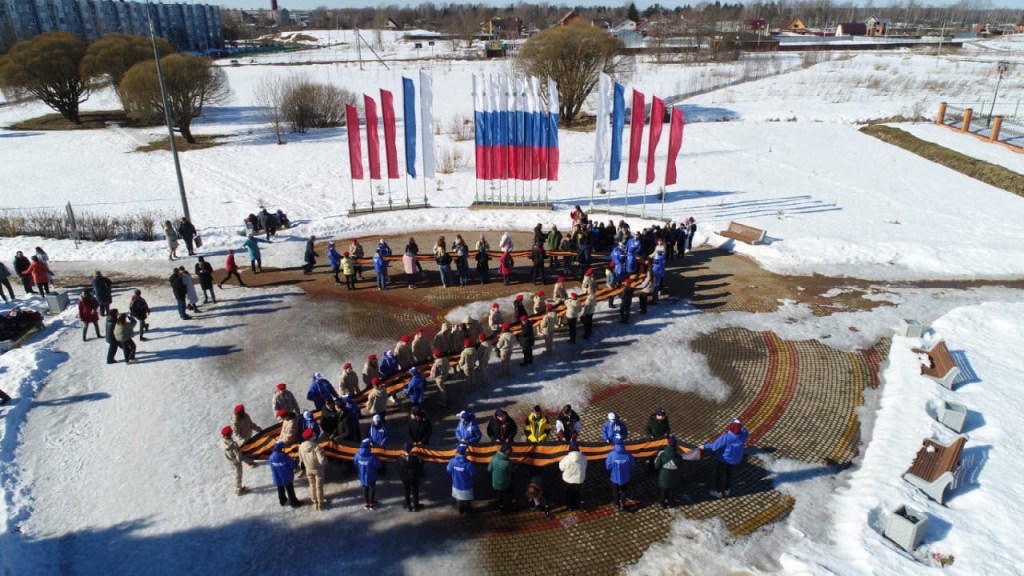
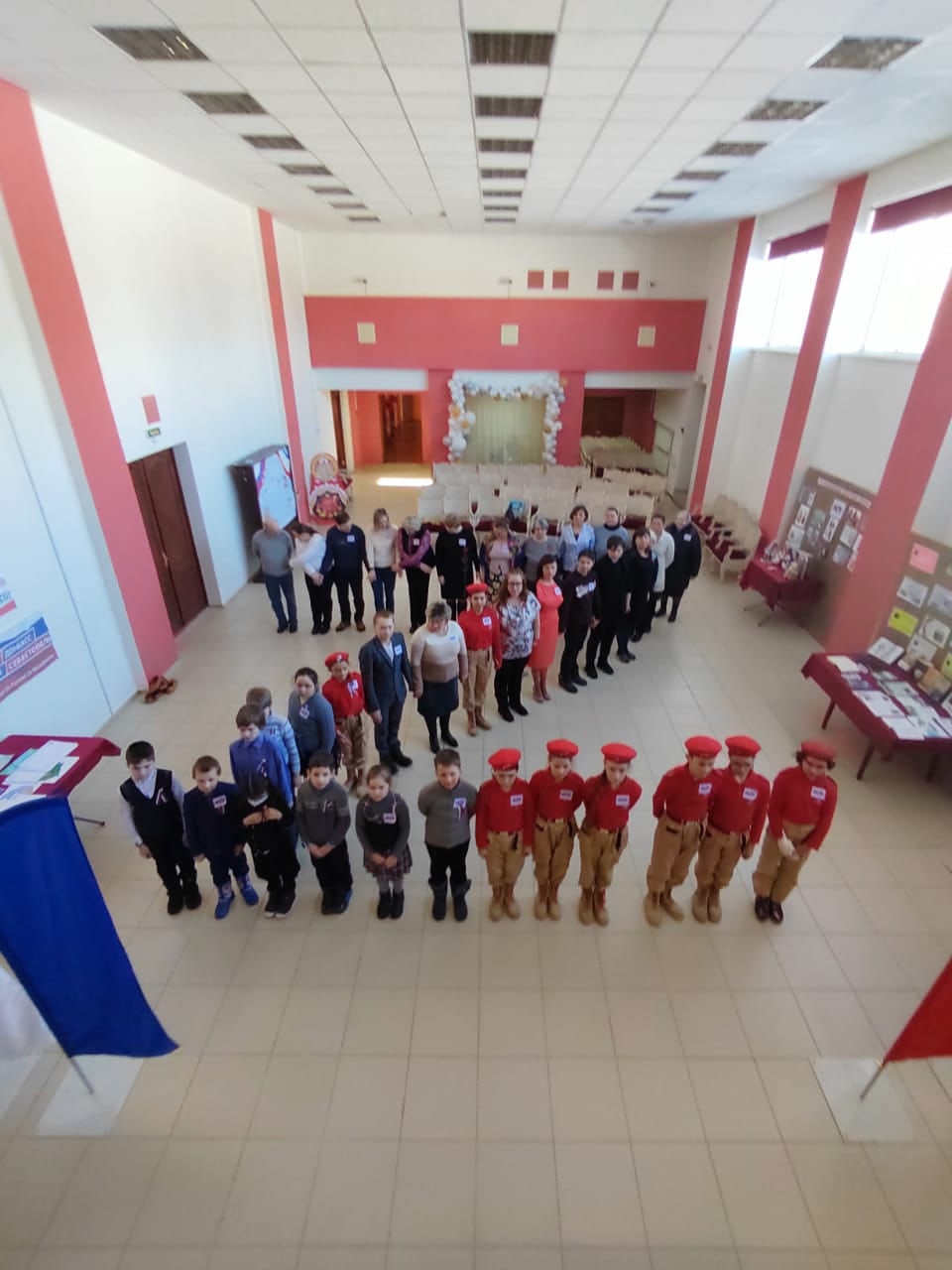
The photographs illustrating this post are from the official page of the town of Slantsy on VK, a Russian social network. They were taken in 2022, soon after the start of the full-scale invasion of Ukraine. Slantsy is a former mining town near the Estonian border, in the north-west of the Russian Federation. It is my hometown.
 КОНСТАНТИН ЗАРУБИН
Оставить комментарий